
FORBES – Feelings Are Data: The Forgotten Leadership Tool
For a long time, I believed that feelings were something to manage, minimize or avoid in the workplace. Like many executives, I thought professionalism meant emotional neutrality. Emotions were personal, leadership was practical. If I wanted to be taken seriously, I had to be rational, composed and always in control.
What I have come to understand is this: Feelings are not distractions from good leadership. They are data for it. They hold essential information about us, about others and about what is working and what is not.
In executive roles, where the stakes are high and the pressure constant, emotional intelligence is critical. It allows you to lead with clarity, courage and connection. It is the difference between reacting and responding, between managing people and truly leading them.
Why Leaders Undervalue Feelings
We have been taught to see emotions as unpredictable or unprofessional. In many corporate cultures, feelings are equated with weakness. Leaders are rewarded for logic, decisiveness and control, not for vulnerability or emotional awareness.
As a result, many executives develop what I call emotional amnesia. We suppress our own feelings in the name of productivity. We discount others’ emotions as distractions. We create cultures where only certain emotions, such as confidence, anger or enthusiasm, are welcome, while others, such as sadness, fear or grief, are pushed aside.
But ignoring emotions does not make them disappear. They go underground, where they drive behavior in unconscious ways. Suppressed emotions show up as reactivity, burnout, disengagement or conflict. They influence how we make decisions, how we show up in meetings and how we relate to each other.
Every emotion is a signal, a piece of data calling for attention. When we ignore those signals, we lose valuable information. When we learn to decode them, we gain insight. And insight is a leadership advantage.
Feelings As Strategic Information
Think about the last time you felt irritated during a meeting. What was that feeling telling you? Perhaps a value was being violated. Perhaps something felt unfair. Perhaps you were not being heard. That irritation was not random. It was data.
Or consider the last time you felt energized. What were you doing? Who were you with? That feeling was also a signal, a clue about what makes you and others feel alive.
When we view emotions not as problems to fix but as information to understand, we change our relationship with them. We stop asking, “How do I get rid of this feeling?” and start asking, “What is this feeling here to tell me?”
This is the foundation of emotional intelligence for executives: the ability to notice, name and navigate emotions with skill. Every feeling contains guidance if we are willing to listen.
The Feelings Wheel: A Practical Tool
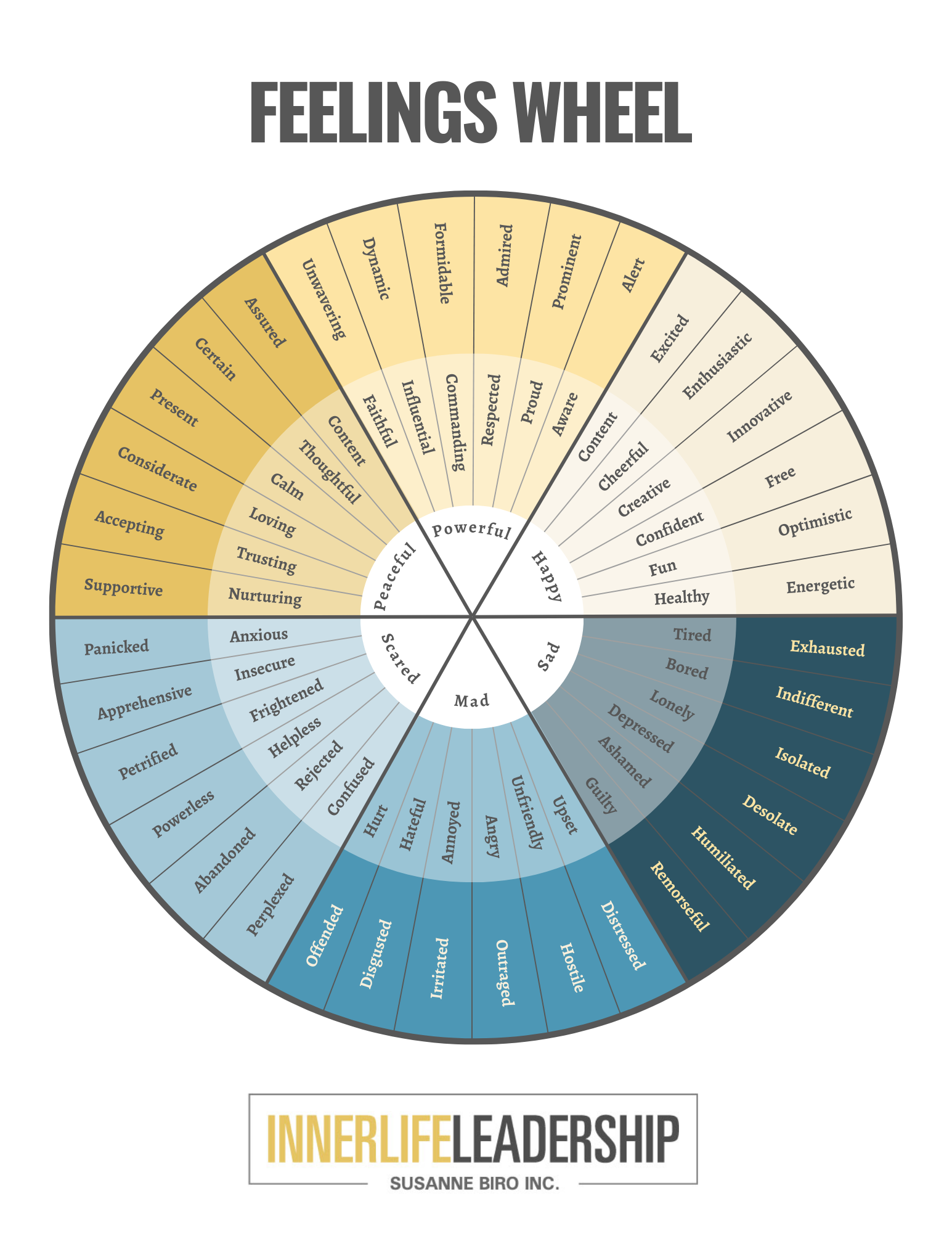
One of the tools in my book is the Feelings Wheel, a visual map of human emotion designed to help us name feelings with precision.
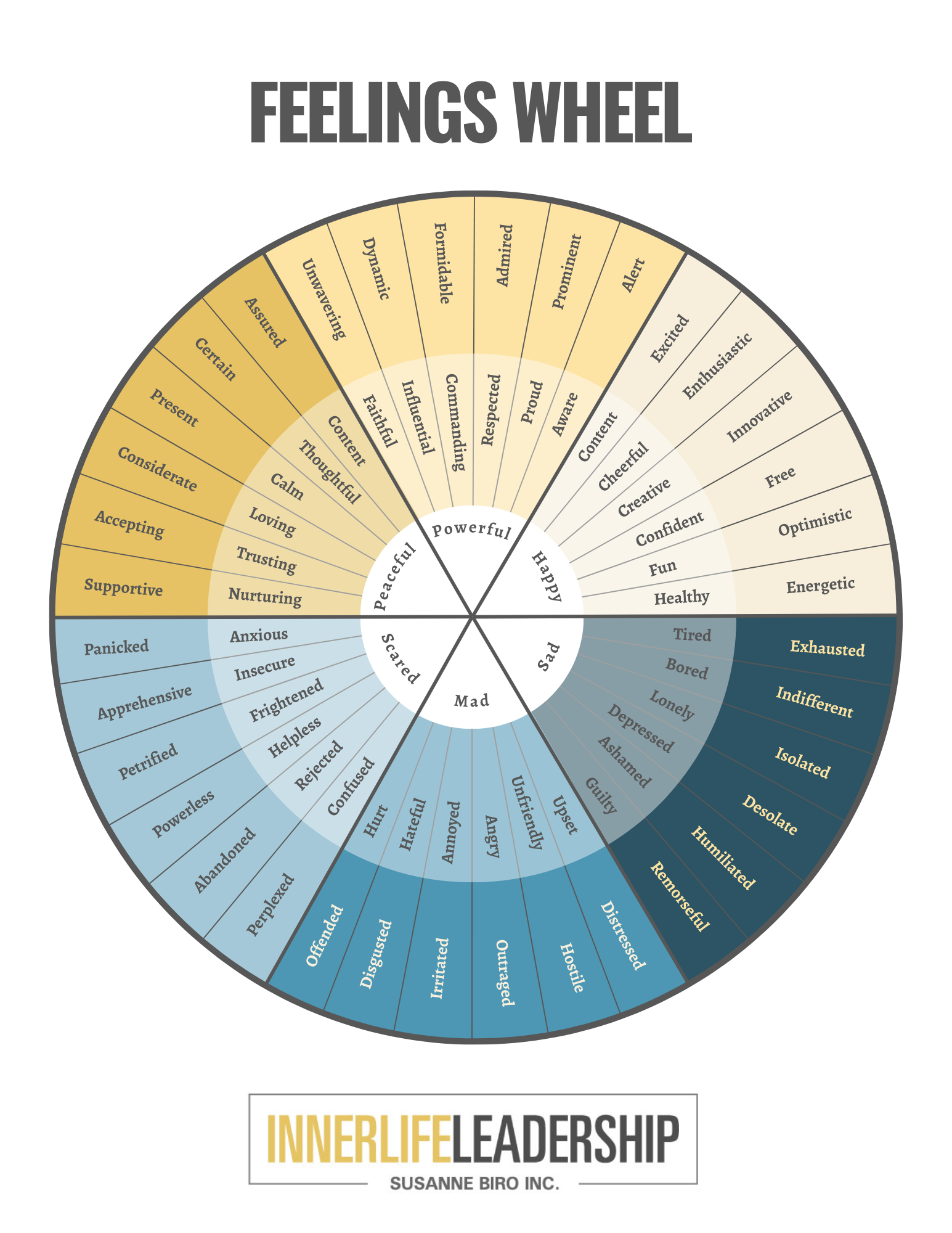
Most leaders rely on a limited vocabulary: stressed, fine, tired, busy. These are states, not true emotions. The Feelings Wheel expands that vocabulary. It encourages us to say, “I am feeling vulnerable,” “I am excited” or “I am resentful,” instead of defaulting to “I am stressed.”
Why does this matter? Because naming emotions accurately allows us to respond intelligently. If I can say, “I am disappointed because I had higher expectations,” I can address the real issue. If I simply say, “I am frustrated,” I might lash out, shut down or miss an opportunity for clarity.
Used consistently, this tool helps build cultures where emotions are not feared but used as data.
Responding To Emotions In Self And Others
Emotional intelligence is not only about naming feelings. It is about how we respond to them.
When an emotion arises, start by noticing it. What am I feeling? Where do I feel it in my body? What might it be pointing to?
Instead of judging or suppressing the feeling, become curious. What is this emotion asking for? What does it want me to see, say or do?
Responding to others requires presence. When someone expresses frustration, sadness or fear, the instinct may be to fix it or move on quickly. Yet what people often need most is to be heard.
You do not need the perfect words. You need to pay attention. You might say, “That makes sense,” or “Tell me more.” These simple responses create safety, and safety is the foundation of trust.
When people feel emotionally safe, they bring more of themselves to work. They take risks. They speak up. They engage.
The Hidden Cost Of Emotional Avoidance
Many leaders avoid emotions because they fear being seen as soft or out of control. But avoidance carries a cost, and that cost is often paid by the team.
When leaders do not acknowledge their own emotions, they signal that others should not either. When leaders suppress vulnerability, they create cultures of armor. When leaders ignore emotional undercurrents, they miss critical information that affects morale, performance and retention.
Emotional intelligence is about being emotionally literate. Feelings are always present. Your relationship to them shapes your leadership.
A More Complete Intelligence
In complex, fast-changing environments, logic alone is not enough. We need leaders who can sense the room, read the tone and notice when something unspoken is getting in the way.
This kind of intelligence is something most of us need to practice.
You Already Have The Tools
You do not need to become someone else to lead this way. You need to become more attuned, more honest, more present.
Feelings are not the enemy of performance. They are the gateway to it. When you understand your emotional landscape, you make better decisions. When you create space for others’ emotions, you build deeper trust. When you lead with emotional intelligence, you create cultures where people thrive.
So, the next time you feel something rise up, before you dismiss or suppress it, pause.
What is it asking you to be aware of, name, ask or do? Practice this and notice the results.
Published on Forbes

Susanne Biro is an executive coach with over two decades of international experience working with CEOs, executive-level leaders, and their teams at some of the world’s most respected organizations. Her work focuses on elevating executive effectiveness, communication, and whole-life success.
- NEW Book: This Could Be Everything
- App: Inner Life Leadership
- Podcast: Deep Fear Podcast
Susanne can be reached at susanne@susannebiro.com